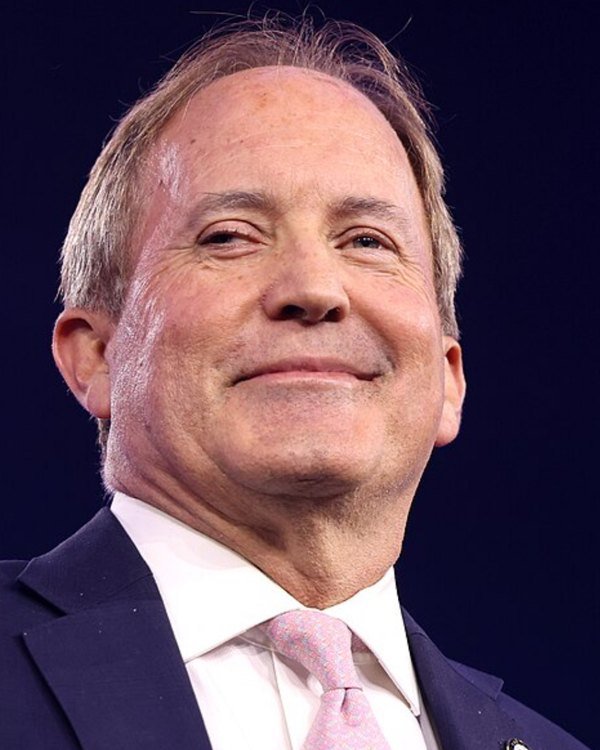
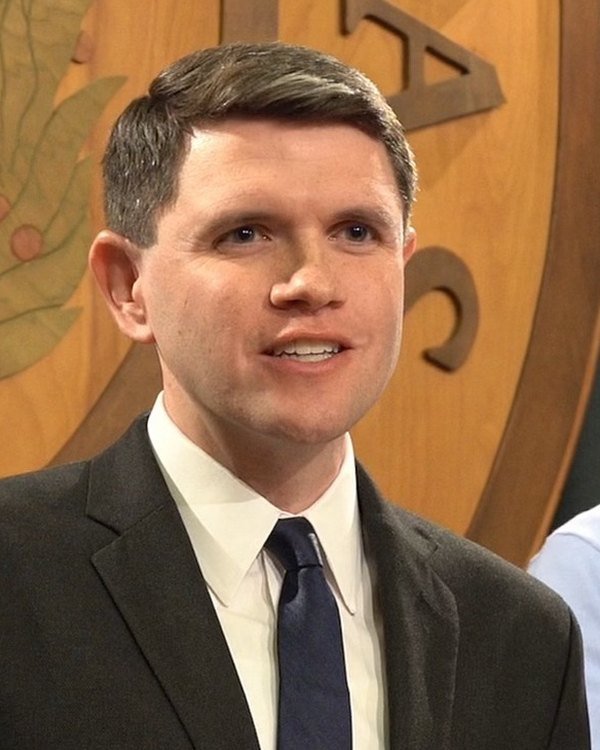
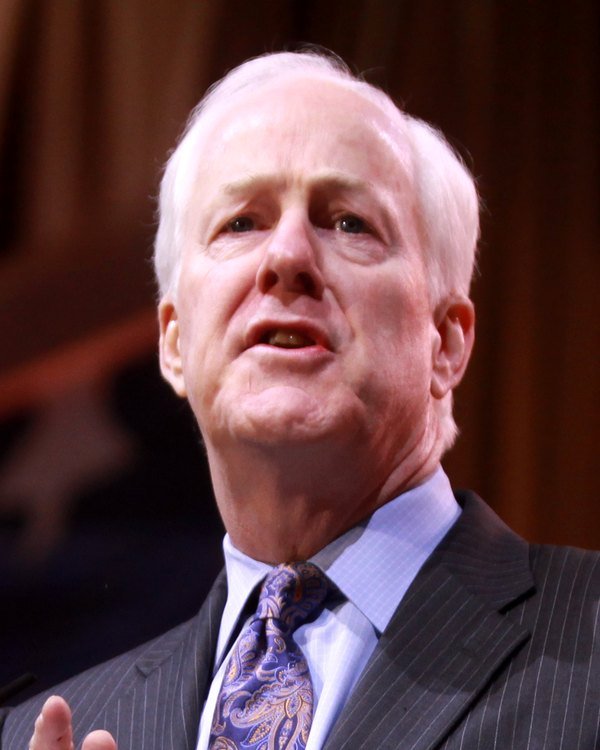
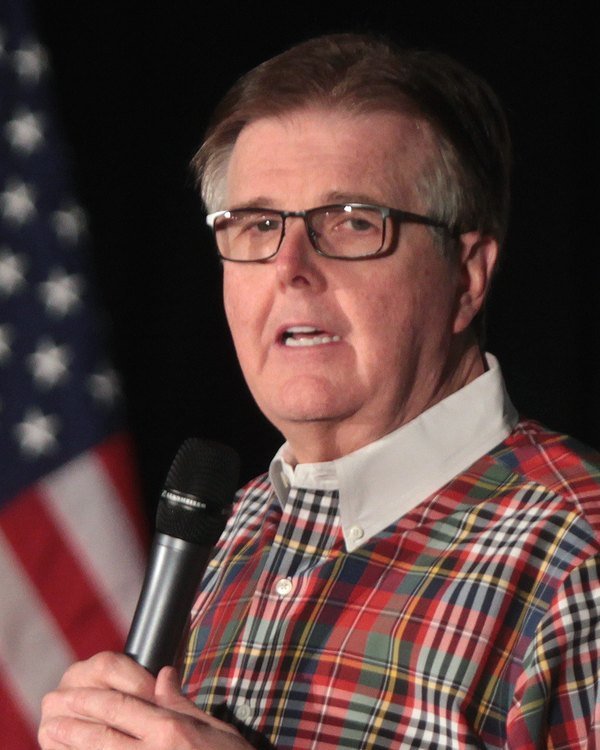
There is a version of this page that would be easy to write and worthless to read. It would list every accusation ever made against Ken Paxton, treat each one as established, and finish with an exclamation mark. He has been running against that page for eleven years and winning. He won a runoff in May by twenty-seven points.
So this is the other page. It leaves out everything that cannot be sourced — and there is a great deal of that, listed at the bottom so you can see what was cut and why. What is left is a record made almost entirely of documents produced by Republicans: a House Journal, a Senate Record of Proceedings, an attorney general’s own press releases, campaign finance filings, and the findings of judges. It is shorter than the internet version. It is much harder to answer.
May 2023The vote his own party took
On May 24, 2023 four investigators for the Texas House Committee on General Investigating presented their findings in public. Lead counsel Erin Epley described the four senior deputies who had gone to the FBI about their boss: “Each of these four men is a conservative Republican civil servant. Interviews show that they wanted to be loyal to General Paxton and they tried to advise him well, often and strongly, and when that failed each was fired after reporting General Paxton to law enforcement.”1 Paxton’s office called the presentation “false,” “misleading” and “full of errors big and small.”1 Nothing the investigators described was ever charged as a crime, and no court has found any of it. Say that plainly, because it matters.
Three days later the House voted. Twenty articles — seven of disregard of official duty, three of false statements in official records, two of constitutional bribery, two of obstruction of justice, and six more.2 The tally, Record Vote 2191 in the House’s own Journal: 121 yeas, 23 nays. The 121 were 61 Democrats and 60 Republicans. The 23 nays were all Republicans. Speaker Dade Phelan presided and voted aye.3
Hold that number still for a second. Sixty members of his own party, most of whom had shared a Capitol with him for years, voted to remove the Republican attorney general of Texas from office. You do not have to take anyone’s word for it. It is a roll call, printed, with their names on it.
The trial ran from September 5 to 16. Sixteen of the twenty articles were tried; four were held in abeyance. Conviction needed 21 votes of 31, and thirty senators voted — Sen. Angela Paxton, his wife, was seated but barred from voting. He was acquitted on every article. The guilty votes ran from 2 to 14; no article reached even a simple majority. Two of the Senate’s Republicans voted guilty on most of them: Kelly Hancock and Robert Nichols.4
One precision point, because it is got wrong constantly in both directions. The four articles held in abeyance were dismissed, not acquitted — the signed judgment says in terms that dismissal “does not constitute an acquittal of any charge.” So “acquitted on all twenty” is wrong, and so is any suggestion he was convicted of anything.4
Sen. Robert Nichols filed his reasons in the record: “I voted to impeach Attorney General Ken Paxton because of the credible testimony I heard and the many thousands of pages of evidence presented during trial… I believe these individuals displayed tremendous courage by reporting what they witnessed as violations of law.”5 Sen. Pete Flores, who voted to acquit, filed his: the standard was proof beyond a reasonable doubt, and it was not met.5 Both statements are in the same document. A reader who wants to know what actually happened should read both.
“I concluded that, you know, Mr. Paxton was engaged in conduct that was immoral, unethical, and I had a good faith belief that it was illegal.”Jeff Mateer, Paxton’s own First Assistant Attorney General, under oath, September 6, 20236
And here is the part that a fair page cannot leave out, because it is the strongest thing anyone has ever said in Paxton’s defence, and it was said by the judge. From the bench, minutes after the verdict, Lieutenant Governor Dan Patrick: “The Speaker and his team rammed through the first impeachment of the statewide official in Texas in over 100 years while paying no attention to the precedent that the House set in every other impeachment before.” He quoted Rep. John Smithee, one of the 23 Republican no votes, calling the House approach “Hang them now and judge them later,” and called for a constitutional amendment requiring sworn testimony, cross-examination, and two weeks for members to read the evidence before voting.7
That is a serious objection to the process and it was made by the presiding Republican officer of the Texas Senate. It does not tell you whether the underlying conduct happened. It tells you the House did not prove it the way a court would. Both of those can be true at once, and on this page they are.
Paxton’s own account has never wavered: “a politically motivated sham from the beginning,” and after the acquittal, “the weaponization of the impeachment process to settle political differences is not only wrong, it is immoral and corrupt.”8 He then endorsed primary challengers against 35 of the House Republicans who had voted to impeach him. On primary night in March 2024, nine House Republicans lost outright and eight more were forced into runoffs. One of his own impeachment defence lawyers took a sitting member’s seat. Speaker Phelan was forced into a runoff and survived it.9
2014–2025Eleven years of charges, and what they came to
This is the section where a partisan page would run up the score and lose the argument. What follows is the actual disposition of every legal matter, including the ones that ended in his favour — which is most of them.
The securities indictment. A Collin County grand jury indicted him in July 2015 on three felony counts: two of securities fraud, alleging he induced two men to put more than $100,000 each into a McKinney technology company without telling them he was being paid 100,000 shares to bring them in, and one of failing to register as an investment adviser representative. He never went to trial. Nearly nine years later, in March 2024, he entered a pretrial diversion agreement — community service, legal-ethics coursework, and roughly $271,000 in restitution. His lawyer, on the record: “it is not a plea bargain. He didn’t plead. There is no admission of guilt.” The three indictments were dismissed on June 18, 2025.10 Ten years, no trial, no conviction, no criminal record.
The SEC case he won. The Securities and Exchange Commission sued him in 2016 over the same facts. A federal judge dismissed it twice, the second time with prejudice, holding that Paxton “had no plausible legal duty to disclose his compensation arrangement with investors” and that he had acted as a finder rather than a broker-dealer.11 That is not a technicality. It is a substantive ruling in his favour and it belongs in any honest account.
The federal investigation that ended in nothing. The FBI investigated the whistleblowers’ allegations from 2020; the Justice Department’s Public Integrity Section took the case. It declined to prosecute — a decision made in the final weeks of a Democratic administration, on the recommendation of a senior career official. No federal charges were ever brought against Ken Paxton.12 Anyone telling you otherwise is wrong, and this page will say so as loudly as it says anything else.
The Bar cases that collapsed. The Commission for Lawyer Discipline sued him in 2022 over his Supreme Court election filing. The Commission itself eventually dropped the case, and the Texas Supreme Court dismissed it as moot in January 2025. No misconduct finding, no sanction, no effect on his law licence.13 And the Supreme Court filing itself: the Court denied leave in a single paragraph for lack of standing, without reaching the merits. Justices Alito and Thomas filed a statement — not a dissent — saying they would have docketed the complaint but “would not grant other relief.”14
Nate Paul. The Austin developer at the centre of everything gave Paxton’s campaign $25,000 in 2018, was federally indicted in 2023 over more than $170 million in loans, pleaded guilty to one count in January 2025, and was sentenced to one day in custody and four months of home confinement. His plea was about his own lending statements. It contains no adjudication about Paxton at all.15
Now the two that did not go away.
May 2, 2014. The Texas State Securities Board found that Paxton, then a state senator, had violated the Texas Securities Act by soliciting investment clients while unregistered, on three separate occasions across eight years. He was reprimanded and fined $1,000. He did not contest it.16 It is an administrative order, not a conviction. It is also the only thing of its kind on his record that he has never argued with.
April 4, 2025. A Travis County district judge entered judgment against the Office of the Attorney General under the Texas Whistleblower Act, finding that the four senior deputies “made their reports to law enforcement in good faith, and OAG terminated each of the Plaintiffs because of their reports to law enforcement.” The award is about $6.6 million. Paxton’s office did not contest the facts — in January 2024 it had conceded liability and damages rather than have him sit for a deposition. He called the judgment “ridiculous,” filed an appeal in May 2025, and dropped the appeal on July 3, 2025.1718
A defender can say, accurately, that no jury ever weighed contested evidence and that the damages were set without an adversarial hearing. That is true. It is also true that the reason no jury heard it is that his office chose to concede rather than let him be deposed, and that having appealed the result he then walked away from the appeal with the brief due. The judgment stands. Texas taxpayers owe it.
The officeWhat he did with eleven years of it
An attorney general’s real power is not the cases he wins. It is the discretion: which complaints get investigated, which organisations get a letter, which subpoena goes out on a day’s notice. Here is how that discretion was used, from the documents.
The election integrity unit
In calendar 2020 the office logged more than 22,000 staff hours on voter fraud and resolved 16 prosecutions — all of them Harris County residents who had given false addresses on a registration form, and none of whom received any jail time. In the following year the unit worked more than 20,000 hours on a budget raised from $1.9 million to $2.2 million and closed three cases. Across January 2020 to September 2022, ProPublica and the Texas Tribune counted at least 390 cases opened and five convictions.19
Paxton’s own answer is a resources argument, and it is quoted here in full because it is his best one: “you’re never going to see thousands of cases coming out of an office that has three prosecutors, and we probably have more than most states.”19 The rejoinder is that the budget went up and the staffing roughly doubled in 2020 while resolved prosecutions halved.
In December 2021 the Texas Court of Criminal Appeals — the state’s highest criminal court, every member elected as a Republican — held 8 to 1 that his unilateral authority to prosecute election cases violated the separation of powers clause of the Texas Constitution. Rehearing was denied. His office complied.20
January 29, 2026
Eight months ago a federal judge in Austin granted a preliminary injunction stopping Paxton from trying to revoke the corporate charter of Jolt Initiative, a Latino voter-registration non-profit. The order is worth quoting at length, because it is a judge describing the attorney general of Texas under oath-quality scrutiny:
“Given multiple opportunities to assert his good faith by pointing to any credible evidence of illegal activity or even general wrongdoing by Plaintiff, its staff, or its volunteers, Defendant could not offer any plausible proof in either his briefing or at the hearing.”U.S. District Judge Robert Pitman, January 29, 202621
And, on the substance of the allegation: it “suggests to the Court that Defendant is harassing Plaintiff and fishing for reasons to investigate its organization… Defendant’s allegations… are both hollow and entirely implausible.” The court also found the conduct “sufficiently constitute[s] intimidation” under section 11(b) of the Voting Rights Act.21
The bar for that finding is deliberately high — the Fifth Circuit’s own standard, which Pitman quoted against himself, is that bad faith “is to be granted parsimoniously.” He granted it on a record in which both sides agreed at the hearing that the volunteer Paxton’s undercover investigator had approached had correctly stated Texas law, and after Paxton’s own lawyers had removed that investigator’s report from their amended petition.21 It is a preliminary injunction and it is appealable. It is still a federal judge saying he could not produce any plausible proof.
Seven days later
On February 5, 2026 — one week after that ruling — Paxton filed suit in Collin County against the Muslim Brotherhood, the Council on American-Islamic Relations and its Austin, Houston and Dallas-Fort Worth chapters, asking a court to declare them foreign terrorist organisations under Texas law and to bar them from “engaging in any activities within the State of Texas.” His statement: “Sharia law and the jihadists who follow sharia law have no business being in Texas.”22
The petition rests in part on CAIR having been named an unindicted co-conspirator in the Holy Land Foundation prosecution. That is a real fact and it is also a prosecutorial listing, not a charge and not a conviction; CAIR itself was never charged. Nothing in the suit has been adjudicated.22 This page’s sibling, Ken Paxton vs. Islam, documents that record in full.
The pattern, stated without motive
Between February 2024 and April 2026 the same office used the same two instruments — a Business Organizations Code “request to examine” and a petition to dissolve — against a Catholic migrant shelter in El Paso, a Latino voter-registration non-profit, an Islamic mediation group in Dallas, and Muslim civil-rights chapters. This page does not say why. It says what the courts did.
On Annunciation House, the El Paso shelter, a district judge called the records demand “a pretext to justify its harassment” and “outrageous and intolerable” — and the Texas Supreme Court reversed him, 8 to 0, finding “no evidence to support” the anti-Catholic-bias finding and reminding the trial court of its duty to extend a coordinate officer “a presumption of regularity, good faith, and legality.” That is a real and unqualified win for Paxton and it is printed here for that reason. The same opinion also says “It is too early for us, or for any court, to express a view about the merits,” and records Paxton now agreeing that “merely providing shelter to persons who happen to be migrants, regardless of their legal status, does not violate the alien-harboring statute.” The shelter is still open.23
Two more, briefly
In December 2023, hours after a Travis County judge authorised an abortion for a woman carrying a foetus diagnosed with full trisomy 18, Paxton wrote to three Houston hospitals warning that the court order “will not insulate you, or anyone else, from civil and criminal liability.” She left Texas.24
In June 2022 his office asked the Department of Public Safety, verbally, for a list of people who had changed the gender marker on their Texas driver’s licence in the previous two years. DPS found more than 16,000 such changes — and told the Washington Post that the data “neither existed nor could be accurately produced,” and that no data of any kind was provided.25 The request is documented. The list was never made. Both halves of that sentence are the story.
And the ledger’s other column
The same office recovered $1.4 billion from Meta over biometric data — which it calls the largest settlement ever obtained by a single state, under a Texas statute nobody had litigated before — $1.375 billion from Google on privacy, Texas’s share of a $700 million multistate settlement it led against Google Play, and opioid recoveries it put above $2.91 billion. In June 2025 it won Free Speech Coalition v. Paxton at the U.S. Supreme Court, 6 to 3, making Texas’s age-verification law the controlling precedent nationwide.26 Those are real results and no honest account omits them.
What the same period also produced, inside the building: assistant attorneys general in the Criminal Prosecutions Division down more than a quarter in two years, the White-Collar Crime Division cut by more than half, and nearly two-thirds of the lawyers gone from Civil Medicaid Fraud. One resignation letter said newer executives were “directing prosecutors to prioritize political considerations.”27
County by countyHow few people made him the nominee
On May 26, 2026, 1,391,634 people voted in the Republican runoff for United States Senator. Texas has 18,662,785 registered voters. That is a turnout of 7.46 percent, a figure the state’s own canvass prints itself.28 Paxton took 63.82 percent of those who showed up — which is to say, about 4.8 percent of registered Texans put him on the November ballot. That is not a scandal; it is what a runoff is. It is also the whole argument for paying attention now. Tap your county, or search for it.
May 26, 2026 Republican runoff · Paxton vs. Cornyn, by county
Read the percentages for what they are. A county’s colour is Paxton’s share of the people who voted in that county’s runoff — not “the Republicans of that county,” and certainly not the county. Texas holds open primaries, so the denominator for the 7.46 percent turnout figure is every registered voter in the state, which is how the canvass reports it. The third figure in the panel is the one that travels: how many of your county’s registered voters actually cast a ballot for him.
The race nowBehind, and out of money
Here is where this race differs from almost any Texas statewide contest in a generation, and where the numbers stop being about the past.
He did not win his own primary. On March 3 John Cornyn led with 42.01 percent to Paxton’s 40.54, with Wesley Hunt taking 13.5 and no one clearing half.30 Paxton took the runoff eleven weeks later, 63.82 to 36.18, after Donald Trump endorsed him a week out.28
Since then he has trailed. Five public polling aggregators in the last week of September put James Talarico ahead by between 3.0 and 3.8 points.31 There are two honest things to say about that, and this page says both. One: the most prolific pollster in this race is labelled Democratic by the Texas Tribune and self-describes as nonpartisan, and its operator was a Democratic nominee for statewide office in 2022 — so hold its numbers loosely. Two: take every partisan-sponsored poll out and Talarico still leads in all of them — Texas Southern by 1, Emerson by 1, Mason-Dixon by 3, Univision by 5, ReconMR/Siena by 6, Marist by 6 — and the one conservative-sponsored survey in that window, Overton Insights for the Texas Public Policy Foundation, showed a 50–50 tie.31 The Cook Political Report moved this race from Lean Republican to Toss Up on August 21.32
And the money is not close in the direction people expect. At the last filed report, June 30, 2026: Talarico $21,548,155 on hand; Paxton $1,755,783. Roughly twelve to one. Advertising since the runoff, per AdImpact: $21 million to $100,000.33 A statewide nominee of the Texas Republican Party is being outspent two hundred to one on air in his own state.
His own party has been saying so out loud. Cornyn, in August: “Paxton’s a poor campaigner. He’s lazy and doesn’t raise money… This is unfortunately shaping up to be a close and I hope not disastrous election.” A former Republican congressman: “I do not plan to vote for Ken Paxton… Just morally, it’s something I cannot bring myself to do.” Mike Pence declined to endorse him on national television while saying he could never vote for the Democrat. In September, George W. Bush and Cornyn headlined a Dallas fundraiser for six Republican Senate candidates; Paxton was not one of them.34
The other side of that ledger, stated fairly: Dan Patrick — the man who presided over his trial — has endorsed him. The national Senate committee says he is raising record-breaking resources. And Rep. Jeff Leach, who served as a House manager prosecuting the impeachment, now introduces him at campaign events.34
One more thing belongs here, reported only as each person said it and nothing more. On July 10, 2025 his wife, state Senator Angela Paxton, filed for divorce in Collin County, pleading adultery. Her statement that day: “Today, after 38 years of marriage, I filed for divorce on biblical grounds… in light of recent discoveries, I do not believe that it honors God or is loving to myself, my children, or Ken to remain in the marriage.” His, the same day: “After facing the pressures of countless political attacks and public scrutiny, Angela and I have decided to start a new chapter in our lives… I ask for your prayers and privacy at this time.”35
This page reports no more than that, and it reports one thing more that a page running the filing alone would be dishonest to omit. Speaking to Republican women in September 2026, Angela Paxton said of the Senate seat: “It’s not the people — it’s the seat… If we lose it to the other team, the nuances that we want to fix with maybe a certain candidate are nothing compared to what it’s going to take to get it back.” She has said she will not campaign for him and has endorsed no one.35
The other sideThe strongest case for Ken Paxton
Open this section ↓ Put as well as his own lawyers would put it — and most of it is true.
A page that only prosecutes is not worth reading. Here is the case for him, stated as well as it can be stated, to the same sourcing standard as everything above. Most of it is accurate.
He has never been convicted of anything. Not once, in any court, in eleven years of investigation. Ten years of felony indictments ended in dismissal with no plea, no trial and no admission.10
A federal judge threw the SEC out — twice, the second time with prejudice. Not on a technicality: on the holding that he had no legal duty to disclose and was a finder rather than a broker-dealer.11
The Justice Department, under a Democratic administration, declined to prosecute him — on the recommendation of a senior career official, with political appointees kept out of it. That is the single strongest answer to anyone who says the federal government had him cold.12
The Texas Senate acquitted him on all sixteen articles tried, and not one drew even a simple majority.4
The State Bar’s misconduct case collapsed, and the Bar itself dropped it. His law licence was never touched.13
The Texas Supreme Court, 8–0, said the El Paso judge who accused him of harassment was legally wrong and found “no evidence to support” the finding of anti-Catholic bias. If you quote that judge, you have to quote this too.23
The process objection is real and it came from the judge. Dan Patrick, presiding, said the House “rammed through” the impeachment with no sworn testimony and no cross-examination, and quoted a Republican member calling it “Hang them now and judge them later.”7
The prosecution took ten years and never held a trial. Four judges, two counties, a multi-year fight over whether the special prosecutors would be paid, and a speedy-trial motion along the way. And when it ended, the state’s own prosecutor called the resolution “the fair, right, and just outcome for both sides.”10
The whistleblower judgment was entered without a contested trial. His office conceded liability and damages; no factfinder weighed evidence and no jury heard the case.17
Nate Paul’s guilty plea says nothing about him. It concerned Paul’s own loan statements and carried no prison time.15
And he has won things that matter. The largest single-state privacy settlements in the country against Meta and Google, billions for Texas in opioid recoveries, and a 6–3 win at the U.S. Supreme Court that is now the controlling national precedent on age verification.26
The voters knew all of it. He was re-elected in 2018 and 2022 after the indictment, survived impeachment in 2023, and won a statewide Republican nomination in 2026 by twenty-seven points.28
The two items that case does not reach: the 2014 securities board order, which he never contested, and the April 2025 whistleblower judgment, which he appealed and then abandoned. Both are findings by bodies with authority over him.1617
The alternativeThe other name on the ballot
Open this section ↓ Who James Talarico is, in his own words.
James Talarico is 37, from Round Rock. He taught sixth-grade language arts at a middle school on the west side of San Antonio before running for the Texas House in 2018, where he has served four terms. He has a master’s in education from Harvard and a master’s from Austin Presbyterian Theological Seminary.36
He won the Democratic nomination outright on March 3 with 52.45 percent, beating U.S. Rep. Jasmine Crockett by 144,512 votes. There was no Democratic runoff for this seat. Colin Allred entered the race and withdrew on the December 2025 filing deadline, running for a House seat instead.37
His own stated priorities, from his Ballotpedia candidate survey rather than from anyone else’s characterisation of him: a cost-of-living tax cut expanding the Child Tax Credit and the Earned Income Tax Credit; capping campaign contributions at every level of government, banning dark-money groups and super PACs and banning partisan gerrymandering; and opposing school vouchers while funding universal pre-kindergarten. He says he is the only member of the Texas Legislature who has never taken corporate PAC money — his claim, which this page has not independently verified.36
He had $21.5 million on hand at the last filing to Paxton’s $1.76 million, and has outspent him roughly two hundred to one on advertising since the runoff.33
Do thisWhat to do this week
“Given multiple opportunities to assert his good faith… Defendant could not offer any plausible proof.”A federal judge, about the sitting Attorney General of Texas, eight months ago21
Seven point four six percent of registered Texans voted in the runoff that made him the nominee.28 The November electorate will be five or six times that size, and it is the only variable on this page that anybody reading it can still move. Five things.
-
Today
Check that your registration is current at the address where you actually live. If you have moved, changed your name, or last voted from another county, assume it is wrong until you have confirmed it is not.
Statewide registration deadline: Monday, October 5, 2026. Your county elections office or votetexas.gov will confirm your status.38
-
Before October 5
Register one person who is not registered. One is enough. A housemate, an adult child, a neighbour who moved here last year and has never voted in Texas.
-
Put it in the calendar now
Early voting runs Monday, October 19 to Friday, October 30. Election Day is Tuesday, November 3; polls are open 7 a.m. to 7 p.m. If you vote by mail, your application must be received — not postmarked — by Friday, October 23.38
-
Five minutes
Send this page to five people who have told you Texas is not winnable. Not to argue — to hand them a roll call from the Texas House and let them count the Republicans themselves. The message below is already written.
-
Any time
If you have money and no time, this is the version of the ask that fits. It pays to put this page in front of people who have written the race off — printing, ads, the work of getting it read. It goes to Is IT Online, not to a campaign.
He has never been convicted of anything. That is true, and it is the beginning of the argument rather than the end of it. Sixty Republicans in the Texas House voted to remove him. Seven of his own senior deputies went to the FBI. A Texas judge found his office fired four of them for it and he stopped appealing. A federal judge found in January that he could not produce any plausible proof for an investigation he had opened. His own party’s former president would not put him on a fundraiser bill last week.
None of that is a conviction. All of it is a record, and a six-year term in the United States Senate is not a jury verdict. It is a hiring decision, and it is yours.
Tuesday, November 3, 2026.
QuestionsFrequently asked, plainly answered
Has Ken Paxton ever been convicted of a crime?
No. He has never been convicted of anything in any court. He was indicted on three felony counts in 2015 and never tried; the charges were dismissed on June 18, 2025 after a pretrial diversion agreement in which he entered no plea and admitted no wrongdoing. A federal judge dismissed the SEC’s civil case against him with prejudice in 2017. The Justice Department declined to prosecute him. Anyone telling you he was convicted, pleaded guilty, or was federally indicted is wrong.
Then what did the impeachment actually establish?
That 121 members of the Texas House — including 60 Republicans — voted to remove him from office on twenty articles, and that the Texas Senate then acquitted him on all sixteen articles that were tried. Impeachment is a political proceeding, not a criminal trial. The four remaining articles were dismissed, not acquitted; the signed judgment says so in terms. So “acquitted on all twenty” is wrong, and so is any claim that he was convicted of anything.
Who were the whistleblowers, and what happened to them?
Seven senior officials of his own office signed a letter in October 2020 stating a good-faith belief that he was violating state and federal law; the group had reported him to federal law enforcement the day before. All had resigned, been fired or been placed on leave within weeks. Four sued. In April 2025 a Travis County judge found the Office of the Attorney General fired them because of their reports, in violation of the Texas Whistleblower Act, and entered a judgment of about $6.6 million. Paxton’s office did not contest the facts. He appealed and then dropped the appeal in July 2025, leaving the judgment final.
What is the January 2026 court ruling the page keeps referring to?
On January 29, 2026 a federal judge in Austin granted a preliminary injunction stopping Paxton from trying to dissolve Jolt Initiative, a Latino voter-registration non-profit. The order states that, given multiple opportunities to point to any credible evidence of illegal activity, he “could not offer any plausible proof in either his briefing or at the hearing,” and that his allegations were “both hollow and entirely implausible.” It is a preliminary injunction and it is appealable.
Is this race actually competitive?
Five public polling aggregators in the last week of September 2026 put James Talarico ahead by between 3.0 and 3.8 points, and the Cook Political Report moved the race from Lean Republican to Toss Up on August 21. Two caveats belong with that: every individual survey has a margin of error wider than the gap, and the most prolific pollster in the race is disputed as partisan. But strip out every partisan-sponsored poll and Talarico still leads in all of them, and the one conservative-sponsored September survey showed a tie. At the last filing Talarico had about twelve times Paxton’s cash on hand.
Why does the page give so much space to arguments in his favour?
Because they are true, and because a page that hides them is not worth trusting on anything else. He has never been convicted. The SEC lost to him on the merits. The Justice Department declined to prosecute. The Senate acquitted him. The Texas Supreme Court reversed, 8–0, the judge who accused him of harassing a Catholic shelter. The Lieutenant Governor who presided over his trial said the House “rammed through” the impeachment. All of that is on this page with its sources, in its own section.
Is this page partisan? Who pays for it?
It is an opinion page with sourced facts, and the two are kept separate: every factual claim links to its source at the foot of the page. It is not a claim that Republicans should stop being Republicans — the case it makes is built almost entirely out of what Republicans and judges have said and done. It is paid for by Voterbiz, a company by Innovative Solutions IT. Money given through this page funds the page’s publication and promotion — it does not go to any candidate or campaign.
I found an error on this page.
Good — that is how this is supposed to work. This is a working draft revised in public. Corrections and challenges to any factual claim are welcome and will be addressed on the page itself. Write to isitonline@gmail.com with the claim and the source, and it will be checked.
Sources
Open ↓ Every citation on this page, numbered and linked.
Sources
- What the House investigators told the committee, May 24, 2023 — lead counsel Erin Epley on the four senior deputies who went to the FBI: “Each of these four men is a conservative Republican civil servant. Interviews show that they wanted to be loyal to General Paxton and they tried to advise him well, often and strongly, and when that failed each was fired after reporting General Paxton to law enforcement.” Investigator Donna Cameron described three potential felony theories, including roughly $72,000 of taxpayer-funded staff time. These were allegations presented to a legislative committee, not findings of any court, and no criminal charge was ever filed on any of them. Paxton’s office called the presentation “false,” “misleading” and “full of errors big and small.” Texas Tribune, May 24, 2023.
- The twenty articles — H.R. No. 2377, 88th Legislature, enrolled text, authored by Reps. Andrew Murr (R), Ann Johnson (D), Charlie Geren (R), Oscar Longoria (D) and David Spiller (R). Seven articles of disregard of official duty, three of false statements in official records, two of constitutional bribery, two of obstruction of justice, and one each of misapplication of public resources, conspiracy, misappropriation of public resources, dereliction of duty, unfitness for office and abuse of public trust.
- The House vote — Texas House Journal, 88th Legislature, 73rd Day, Saturday, May 27, 2023, pp. 5958–5959, Record Vote 2191: 121 yeas, 23 nays, two present and not voting. The Texas Tribune reports the 121 as 60 Republicans and all 61 Democrats; the Journal’s list of nays is 23 Republicans, which is consistent with that split. Speaker Dade Phelan presided and voted aye. Paxton was suspended from office on impeachment under Article XV of the Texas Constitution.
- The verdict — Texas Senate sitting as a Court of Impeachment, Record of Proceedings, Saturday, September 16, 2023. Sixteen articles were tried; conviction required 21 of 31 votes; thirty senators voted, Sen. Angela Paxton being barred from voting as the spouse of a party. Guilty votes ran from 2 to 14: twelve articles failed 14–16, Article V failed 13–17, Article IX 12–18, Article VIII 8–22 and Article IV 2–28. No article reached even a simple majority. Two of the Senate’s Republicans voted guilty on most articles: Kelly Hancock and Robert Nichols. Articles XI–XIV, held in abeyance, were dismissed 19–11; the signed judgment states that dismissal “does not constitute an acquittal of any charge.” So the accurate sentence is: acquitted on all sixteen articles tried, with four dismissed without a verdict — not “acquitted on all twenty.”
- Why the two Republicans voted guilty — Sen. Robert Nichols’s filed statement, Record of Proceedings, September 16, 2023: “I voted to impeach Attorney General Ken Paxton because of the credible testimony I heard and the many thousands of pages of evidence presented during trial… I believe these individuals displayed tremendous courage by reporting what they witnessed as violations of law. Their testimony, combined with the totality of all the other evidence presented by the House Board of Managers, proved to me beyond a reasonable doubt that the Attorney General’s actions violated Texas law and his oath of office.” For balance, Sen. Pete Flores’s statement in the same record explains his acquittal votes on the burden of proof.
- Sworn testimony — Jeff Mateer, Paxton’s own First Assistant Attorney General, Volume 2, September 6, 2023, pp. 57–58, on what he concluded the day before the group went to the FBI: “I concluded that, you know, Mr. Paxton was engaged in conduct that was immoral, unethical, and I had a good faith belief that it was illegal.” And on the engagement of an outside lawyer: “the Attorney General is not above the law. He has to comply with the law like all of us.” All trial transcripts are published at senate.texas.gov/coi.php.
- What the judge said — Lt. Gov. Dan Patrick’s closing remarks from the bench, Record of Proceedings, September 16, 2023, pp. 1327–1330: “The Speaker and his team rammed through the first impeachment of the statewide official in Texas in over 100 years while paying no attention to the precedent that the House set in every other impeachment before.” He quoted Rep. John Smithee, one of the 23 Republican no votes, calling the House approach “Hang them now and judge them later,” and called for a constitutional amendment requiring sworn testimony, cross-examination and two weeks for members to read the evidence. Note a common misattribution: the line “Simply put, the burden of proof — beyond a reasonable doubt — was not met” is Sen. Charles Schwertner’s written statement, printed at p. 1332, not Patrick’s.
- Paxton’s own words — after the House vote, May 27, 2023: “The ugly spectacle in the Texas House today confirmed the outrageous impeachment plot against me was never meant to be fair or just. It was a politically motivated sham from the beginning.” After the acquittal, September 16, 2023: “The sham impeachment coordinated by the Biden Administration with liberal House Speaker Dade Phelan and his kangaroo court has cost taxpayers millions of dollars… The weaponization of the impeachment process to settle political differences is not only wrong, it is immoral and corrupt.” Carried the same day by the Associated Press, the Texas Tribune and Fox 4 Dallas-Fort Worth.
- What he did next — Paxton endorsed primary challengers against 35 of the House Republicans who had voted to impeach him. On primary night, March 5, 2024, nine House Republicans lost outright and eight more were forced into runoffs; Mitch Little, one of Paxton’s own impeachment defence lawyers, unseated a sitting member. Speaker Dade Phelan, who presided over the impeachment, was forced into a runoff and won it. Texas Tribune, March 6, 2024. This page does not give a total for how many of the sixty were ultimately defeated, because no single authoritative post-runoff count could be sourced.
- The securities case, start to finish — a Collin County grand jury returned three felony indictments in July 2015, unsealed August 3 when he surrendered: two first-degree counts of securities fraud, with complainants Byron Cook and Joel Hochberg, each alleged to have put more than $100,000 into Servergy Inc. without being told Paxton was paid 100,000 shares to bring them in, and one third-degree count of failing to register as an investment adviser representative. He never went to trial. On March 26, 2024 he entered a pretrial diversion agreement — 100 hours of community service, legal-ethics coursework and roughly $271,000 in restitution over eighteen months. His lawyer Dan Cogdell, on the record: “it is not a plea bargain. He didn’t plead. There is no admission of guilt.” All three indictments were dismissed June 18, 2025 after prosecutors reported the terms complete. Texas Tribune, March 26, 2024; Bloomberg Law and WFAA, June 18, 2025. Some outlets report the restitution as about $300,000; AP, the Tribune and Bloomberg Law report roughly $271,000.
- The federal civil case ended in his favour — the SEC sued Paxton, Servergy and others on April 11, 2016 (No. 4:16-cv-00246, E.D. Tex.) under § 17(b) of the Securities Act and § 15(a) of the Exchange Act (SEC release 2016-65). Judge Amos L. Mazzant III dismissed it as to Paxton in October 2016 and again, with prejudice, on March 2, 2017, holding Paxton “had no plausible legal duty to disclose his compensation arrangement with investors” and that he acted as a finder rather than a broker-dealer. That is a substantive ruling in his favour and this page says so.
- No federal charges, ever — the FBI investigated the whistleblowers’ allegations from 2020 and the Justice Department’s Public Integrity Section took the case over. The Justice Department declined to prosecute, in a decision made in the final weeks of the Biden administration on the recommendation of a senior career official. First reported by the Associated Press on April 3, 2025. Paxton’s attorney Dan Cogdell: “I never thought they had a case they could make.” No federal indictment of Ken Paxton exists.
- The Bar cases — the Commission for Lawyer Discipline sued Paxton in May 2022 over his Texas v. Pennsylvania filing. The trial court denied his plea to the jurisdiction; the Fifth Court of Appeals dismissed his interlocutory appeal for want of jurisdiction on April 18, 2024; the Commission then voluntarily dropped the suit and the Texas Supreme Court dismissed it as moot on January 23, 2025. The parallel case against First Assistant Brent Webster was dismissed by the Texas Supreme Court on December 31, 2024 on separation-of-powers grounds. No misconduct finding, no sanction, no effect on his law licence. (Note that the two cases are routinely confused: it was Webster’s case a trial court dismissed, not Paxton’s.)
- Texas v. Pennsylvania — Paxton moved on December 8, 2020 for leave to sue Pennsylvania, Georgia, Michigan and Wisconsin. The Supreme Court’s order of December 11, 2020, in full: “The State of Texas’s motion for leave to file a bill of complaint is denied for lack of standing under Article III of the Constitution. Texas has not demonstrated a judicially cognizable interest in the manner in which another State conducts its elections.” Justices Alito and Thomas filed a statement, not a dissent, saying they would have docketed the complaint but “would not grant other relief.” No justice would have given Texas what it asked for, and the Court did not reach the merits.
- Nate Paul — the Austin developer at the centre of the whistleblower allegations gave Paxton’s campaign $25,000 in 2018. He was federally indicted in June 2023 on eight counts of making false statements to financial institutions about more than $170 million in loans, pleaded guilty to one count on January 15, 2025, and on April 16, 2025 was sentenced to one day in custody, four months of home confinement, five years of supervised release and a $1 million fine (Austin American-Statesman; Dallas Morning News). His plea concerns his own lending statements. It contains no adjudication about Paxton.
- The one finding that stuck — on May 2, 2014 the Texas State Securities Board issued a disciplinary order finding that Paxton, then a state senator, violated the Texas Securities Act by soliciting investment clients on three occasions in 2004, 2005 and 2012 while unregistered. He was reprimanded and fined $1,000 and did not contest it. It is an administrative order, not a criminal conviction — and it is the only body with authority over him that has ever made a finding against him, other than the Travis County court in 2025. Texas Tribune, May 2, 2014.
- The judgment that stands — on April 4, 2025 Travis County District Judge Catherine Mauzy entered judgment for the four plaintiffs, finding the Office of the Attorney General violated the Texas Whistleblower Act: they “made their reports to law enforcement in good faith, and OAG terminated each of the Plaintiffs because of their reports to law enforcement.” Paxton’s office did not contest the facts, having conceded liability and damages in January 2024 rather than have him sit for a deposition. The award is reported as $6.6 million (Texas Tribune, KUT, WFAA) and $6.67 million (The Texan, Bloomberg Law, Dallas Morning News). He called it “a ridiculous judgment,” appealed in May 2025, and dropped the appeal on July 3, 2025, leaving it final. Texas Tribune, April 4, 2025; KUT, July 4, 2025. Payment still requires a legislative appropriation; whether that has happened could not be verified, and this page does not say it has.
- The whistleblowers — on September 30, 2020 senior officials of his own office reported Paxton to federal law enforcement; seven signed a letter the next day stating a “good faith belief that the attorney general is violating federal and/or state law including prohibitions related to improper influence, abuse of office, bribery and other potential criminal offenses.” All had resigned, been fired or been placed on leave within weeks. Four sued under the Texas Whistleblower Act. A $3.3 million settlement was agreed February 10, 2023 — including a statement apologising for calling them “rogue employees,” and expressly no admission of fault by either side — and the Legislature never funded it; the request for that appropriation is what triggered the House investigation. Texas Tribune.
- The election integrity unit — two Houston Chronicle investigations by Taylor Goldenstein, built on records obtained by American Oversight and Hearst. In calendar 2020 the office logged more than 22,000 staff hours on voter-fraud cases and resolved 16 prosecutions, all Harris County residents who gave false addresses on registration forms, none of whom received jail time. In the year to September 2021 the unit worked more than 20,000 hours on a budget raised from $1.9 million to $2.2 million and closed three cases. ProPublica and the Texas Tribune counted at least 390 cases opened and five election-related convictions between January 2020 and September 2022. Paxton’s own explanation, quoted in the Chronicle: “you’re never going to see thousands of cases coming out of an office that has three prosecutors, and we probably have more than most states.” The widely repeated “three convictions after 22,000 hours” conflates two different years and swaps cases closed for convictions; this page does not use it.
- His prosecution power, removed — State v. Stephens, Texas Court of Criminal Appeals (the state’s highest criminal court, not the Texas Supreme Court), decided December 15, 2021, 8–1: the grant of unilateral prosecutorial authority to the Attorney General in § 273.021 of the Election Code violates the separation-of-powers clause of the Texas Constitution. Rehearing was denied September 28, 2022. Paxton’s office responded that the decision “can only empower dishonest campaigns to silence voters across the state.” His office complied.
- A federal judge’s finding, January 2026 — Jolt Initiative, Inc. v. Paxton, No. 1:25-CV-1808-RP (W.D. Tex.), preliminary injunction granted by Judge Robert Pitman on January 29, 2026, against Paxton’s attempt to revoke the corporate charter of a Latino voter-registration non-profit. From the order: “Given multiple opportunities to assert his good faith by pointing to any credible evidence of illegal activity or even general wrongdoing by Plaintiff, its staff, or its volunteers, Defendant could not offer any plausible proof in either his briefing or at the hearing.” And: “it suggests to the Court that Defendant is harassing Plaintiff and fishing for reasons to investigate its organization… Defendant’s allegations… are both hollow and entirely implausible.” The court also found the state’s conduct “sufficiently constitute[s] intimidation” under § 11(b) of the Voting Rights Act. The order records that both parties agreed at the hearing that Jolt’s volunteer had correctly stated Texas law to the state’s undercover investigator, and that Paxton had removed that investigator’s report from his own amended petition. The Fifth Circuit’s standard, which Pitman quoted against himself, is that “the bad faith exception is narrow and is to be granted parsimoniously.” It is a preliminary injunction and is appealable.
- One week later — on February 5, 2026, seven days after the Jolt ruling, Paxton filed an Original Petition and Application for Temporary and Permanent Injunctions in Collin County district court against the Muslim Brotherhood, CAIR and its Austin, Houston and Dallas-Fort Worth chapters, seeking a declaration that they are foreign terrorist organisations under Texas Penal Code § 71.01(e) and an injunction barring them from “engaging in any activities within the State of Texas.” (It is not a quo warranto, which is the instrument he used against Annunciation House and Jolt.) The petition rests on the 1993 Philadelphia meeting, the Holy Land Foundation prosecution and CAIR’s listing there as an unindicted co-conspirator — a prosecutorial designation, not a charge or a conviction; CAIR was never charged. Paxton: “Sharia law and the jihadists who follow sharia law have no business being in Texas.” CAIR: “another frivolous, politically motivated anti-Muslim publicity stunt.” Nothing has been adjudicated. This page’s sibling, Ken Paxton vs. Islam, covers this record in full.
- Annunciation House — in February 2024 the office demanded records from an El Paso Catholic migrant shelter on roughly one day’s notice and said it would seek to revoke the shelter’s charter. On July 2, 2024 District Judge Francisco Dominguez ruled against the office, calling the records demand “a pretext to justify its harassment” and “outrageous and intolerable.” The Texas Supreme Court reversed him, 8–0, on May 30, 2025 (No. 24-0573), holding the Attorney General has constitutional authority to file the action, finding “no evidence to support” the trial court’s anti-Catholic-bias finding, and reminding it of its duty to extend a coordinate officer “a presumption of regularity, good faith, and legality.” The same opinion says “It is too early for us, or for any court, to express a view about the merits,” and records the Attorney General now agreeing that “merely providing shelter to persons who happen to be migrants, regardless of their legal status, does not violate the alien-harboring statute.” Nothing has been decided on the merits and the shelter remains open.
- Kate Cox — on December 7, 2023, hours after a Travis County judge authorised an abortion for a woman carrying a foetus diagnosed with full trisomy 18, Paxton wrote to three Houston hospitals warning that the ruling “will not insulate you, or anyone else, from civil and criminal liability,” including first-degree felony prosecution and civil penalties of not less than $100,000 per violation. She left Texas for the procedure on December 11; the Texas Supreme Court ruled against her later that day in In re State of Texas, No. 23-0994. Texas Tribune, CNN and NPR, December 2023.
- The list that was asked for — in June 2022 Paxton’s office made a verbal request to Texas Department of Public Safety staff for a list of people who had changed the gender marker on their Texas driver’s licence over the previous two years. A DPS division chief emailed colleagues: “Need total number of changes from male to female and female to male for the last 24 months, broken down by month.” DPS identified more than 16,000 such changes. DPS told the Washington Post that the data “neither existed nor could be accurately produced” and that no data of any kind was provided. The request is documented; no list was ever produced. Washington Post, December 14, 2022, carried within a day by the Texas Tribune, KSAT and NBC DFW.
- The other side of the ledger, and it is substantial — the office obtained $1.4 billion from Meta in July 2024 over biometric data, which it calls the largest settlement ever obtained by a single state, under a Texas statute nobody had litigated before; $1.375 billion from Google in a privacy settlement finalised October 31, 2025 (not $1.4 billion — that is the Meta figure, and several outlets rounded); Texas’s share of a $700 million multistate Google Play antitrust settlement that Texas led; and opioid recoveries the office put above $2.91 billion for Texas as of May 2023. In Free Speech Coalition v. Paxton, decided June 27, 2025, the U.S. Supreme Court upheld Texas’s age-verification law 6–3, making it the controlling national precedent. Figures from the office’s own releases at texasattorneygeneral.gov.
- The office itself — Texas Tribune reporting of May 27, 2023 found assistant attorneys general in the Criminal Prosecutions Division down more than 25 percent in two years, the White-Collar Crime Division cut by more than half and merged into another division, and nearly two-thirds of the lawyers gone from Civil Medicaid Fraud. One assistant attorney general’s resignation letter said newer executives were “directing prosecutors to prioritize political considerations.” No reliable aggregate count of departures exists and this page gives none.
- The runoff — same source, election 58315, May 26, 2026: Paxton 888,196 (63.82 percent), Cornyn 503,438 (36.18 percent), total 1,391,634; registration 18,662,785, statewide turnout 7.46 percent; 254 of 254 counties. Donald Trump endorsed Paxton on May 19, one week before the vote. Note: Wikipedia currently gives 890,436 / 504,325 / 1,394,761 for this race. Those figures do not match the certified canvass, and the canvass is what this page uses.
- The county map — Texas Secretary of State, County by County Canvass Report, election 58315, race 5075 (U.S. Senator). All 254 counties were diffed against the signed report with no mismatches; the build script refuses to run if they ever stop matching. Per-county registration is the certified count from the same canvass.
- The primary — Texas Secretary of State, Official Canvass Report, election 53813, 2026 Republican Primary, March 3, 2026, U.S. Senator: Cornyn 910,382 (42.01 percent), Paxton 878,564 (40.54 percent), Wesley Hunt 293,250, five others; total 2,166,910 of 18,657,918 registered, turnout 11.61 percent. No candidate cleared 50 percent, so a runoff followed. Retrieved from the state’s results system, goelect.txelections.civixapps.com. Paxton announced the challenge on Fox News on April 8, 2025: “It’s definitely time for a change in Texas.”
- The polling — five public aggregators in the last week of September 2026 put Talarico ahead by between 3.0 and 3.8 points: 270toWin 48.0–44.7, Decision Desk HQ 48.2–44.4, RealClearPolitics 47.6–44.6, the Texas Tribune tracker 48.1–44.7, Silver Bulletin 48.6–45.3. Two honesty notes. First, the most prolific pollster in this race, Texas Public Opinion Research, is labelled Democratic by Wikipedia and the Texas Tribune and self-describes as a nonpartisan initiative; its operator was the 2022 Democratic nominee for Railroad Commissioner. Second, and more to the point: strip out every partisan-sponsored survey and Talarico still leads — Texas Southern +1, Emerson +1, Mason-Dixon +3, Univision +5, ReconMR/Siena +6, Marist +6 — and the one conservative-sponsored poll in the September window, Overton Insights for the Texas Public Policy Foundation, showed a 50–50 tie with leaners pushed. Individual survey documents are linked from those trackers.
- The rating — the Cook Political Report moved the Texas U.S. Senate race from Lean R to Toss Up on August 21, 2026.
- The money — Federal Election Commission July quarterly reports, period ending June 30, 2026. Talarico for Texas: $68,560,930 raised, $21,548,155 cash on hand. Ken Paxton for Senate: $9,248,698 raised, $1,755,783 cash on hand. That is roughly 12 to 1. AdImpact figures reported by CNN on August 14, 2026 put post-runoff advertising at $21 million to $100,000. The next filing, the October quarterly, is due October 15; no later cash figure exists yet.
- His own party, in 2026 — Sen. John Cornyn, to the Texas Tribune on August 28, 2026: “Paxton’s a poor campaigner. He’s lazy and doesn’t raise money… This is unfortunately shaping up to be a close and I hope not disastrous election.” Former Rep. Michael Burgess: “I do not plan to vote for Ken Paxton… Just morally, it’s something I cannot bring myself to do.” Former Vice President Mike Pence declined to endorse him on Meet the Press on May 31, 2026, while saying he could never vote for the Democrat. On September 22, 2026 former President George W. Bush and Cornyn headlined a Dallas fundraiser for six Senate candidates; Paxton was not among them. As of mid-August six of the twenty-four Texas Republicans in the U.S. House were still withholding support. For balance: Lt. Gov. Dan Patrick has endorsed him, the NRSC says he is “raising record-breaking resources,” and Rep. Jeff Leach — who served as a House impeachment manager — now introduces him at campaign events.
- The divorce — reported here only as each person stated it publicly, in their own words. State Sen. Angela Paxton filed in Collin County on July 10, 2025, pleading adultery and insupportability, with separation pleaded “on or about June 1, 2024.” Her statement that day: “Today, after 38 years of marriage, I filed for divorce on biblical grounds. I believe marriage is a sacred covenant and I have earnestly pursued reconciliation. But in light of recent discoveries, I do not believe that it honors God or is loving to myself, my children, or Ken to remain in the marriage.” Ken Paxton, the same day: “After facing the pressures of countless political attacks and public scrutiny, Angela and I have decided to start a new chapter in our lives… I ask for your prayers and privacy at this time.” KUT / The Texas Newsroom and the Texas Tribune, July 10, 2025. The case file was sealed and then reopened to the public by agreement of both parties on December 18, 2025; the divorce is reported as finalised. Speaking to the Texas Federation of Republican Women in September 2026, Angela Paxton said of the seat: “It’s not the people — it’s the seat… If we lose it to the other team, the nuances that we want to fix with maybe a certain candidate are nothing compared to what it’s going to take to get it back” (Houston Chronicle, September 23, 2026). She has said she will not campaign for him and has endorsed no one. This page does not report whether Ken Paxton has denied the adultery allegation, because no statement from him on it could be found in his own words.
- James Talarico — 37, born in Round Rock, a former sixth-grade language arts teacher at Rhodes Middle School in west San Antonio, in the Texas House since November 2018, currently representing District 50 and not seeking re-election to it. BA in government from UT-Austin, MEd from Harvard, MA from Austin Presbyterian Theological Seminary. His own stated priorities, from his Ballotpedia Candidate Connection survey: a cost-of-living tax cut expanding the Child Tax Credit and Earned Income Tax Credit; capping campaign contributions at every level of government, banning dark-money groups and super PACs and banning partisan gerrymandering; and opposing school vouchers while funding universal pre-K. He says he is the only member of the Texas Legislature who has never taken corporate PAC money — his own claim, which this page has not independently verified.
- The Democratic nomination — same source, election 53814, March 3, 2026: James Talarico 1,216,412 (52.45 percent), U.S. Rep. Jasmine Crockett 1,071,900 (46.22 percent), Ahmad R. Hassan 30,875; total 2,319,187. He cleared 50 percent outright, so there was no Democratic runoff for this office — the May 26 Democratic runoff payload contains no U.S. Senator race at all. Colin Allred entered the Senate race and withdrew on the December 8, 2025 filing deadline, running for the 33rd congressional district instead.
- Registration deadline, early voting window, mail-ballot deadlines and Election Day — Texas Secretary of State, Important Election Dates. Polls are open 7 a.m. to 7 p.m. on November 3. Voter-facing portal: votetexas.gov.
What this page deliberately does not say. A great many claims about Ken Paxton circulate and do not survive checking, and leaving them out is the method, not an oversight. He was not convicted, did not plead guilty, was not federally indicted, was not disbarred and did not spend a night in jail. No court has ever found that he took a bribe — those allegations appear in the 2020 whistleblower letter and in House impeachment articles, the Senate acquitted, and the Justice Department declined to prosecute. The claims that a donor paid for renovations to his home and that he had an affair with a woman that donor employed are allegations made in an impeachment proceeding and never adjudicated; the woman named was called as a witness and never testified. The Supreme Court did not rule on the merits of his 2020 election suit, and Alito and Thomas did not dissent — they filed a statement saying they would not have granted relief. The widely repeated “three convictions after 22,000 hours” figure for his election unit conflates two different years and swaps cases closed for convictions. And two advocacy sites that dominate search results for his name were treated as research leads and are cited nowhere on this page.